Tango Dance Classes in Brighton
Tango dance classes in Brighton that start with the least glamorous and most important thing in the whole dance: walking. Partners rotate around the room, so arriving alone is entirely ordinary, and what gets taught is a way of improvising with another person rather than a sequence to memorise. £10 a class, £32 for four weeks — and the block opens when its interest list is deep enough, so add a name to it.
 Tango · the room rotates
Improvised, not choreographed.
Start with the list.
Because partners rotate, this class needs a decent spread of people before it works properly, which is exactly why it launches off a list rather than a hunch. Put your name down, and the evening, the room and the shoe advice all arrive together, ahead of anyone else hearing about it.
- Once open: £10 for a single class, £32 across four weeks
- Rotation means you never need to arrive with somebody
- Both roles taught — lead, follow, or have a go at each
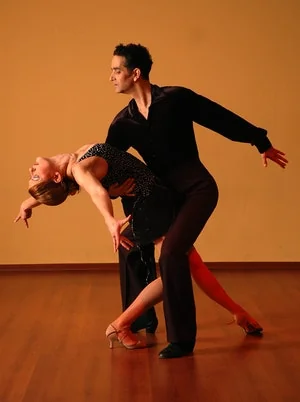 Partner work · studio
The shape of the class once it launches.
- WhereA studio in the middle of Brighton, near the station — we send the address once the room is confirmed
- WhenOne evening a week, chosen when the list has enough people to rotate
- Level & agesBeginners upward · 17–75 · come alone, both roles open
- Cost£10 drop-in · £32 for four weeks (£8 a class)
A conversation, not a sequence.
There is no routine to learn
Argentine tango is improvised, which throws people who assume dance classes end with a set piece performed to a track. There is nothing to memorise and nothing to perform. What you learn instead is a language: a handful of ways two people can move together, plus the connection that lets one of them suggest something and the other reply. Two dancers who have never met can have a perfectly satisfying three minutes on that basis alone, which is the whole trick of the form.
Walking, embrace, and the cross
The walk comes first and never really stops coming first. Tango's walk is deceptively difficult — grounded, unhurried, the weight fully arrived on one foot before the other is allowed to leave — and it is precisely what separates dancers who look composed from dancers who look busy. The embrace follows, and it is more architectural than the films imply: a shared frame that carries information rather than a romantic pose. Then come the ochos and the cross, which are mostly just the walk bent into interesting shapes.
Rotation, roles and where it leads
Partners rotate through the class so nobody has to arrive with one, and both roles are open to anybody who fancies them — leading and following are skills rather than genders, and picking up a little of each makes you noticeably better at whichever you prefer. From here some people add ballroom for the bigger travelling dances, and a fair number end up enquiring about a first dance once they realise a tango walk survives contact with a floor full of relatives far better than a memorised routine does. The rest of the styles are listed on our Brighton classes page.
What the opening month covers.
Connection sets the tempoThe walk
Alone first, then to somebody else's timing. Slower than feels reasonable, and worth every minute of it.
The embrace
Frame, contact and how information travels through it. Less romance, more engineering than people expect.
The cross
The first proper figure, and the small pause inside it where the whole dance suddenly makes sense.
Ochos and the floor
Pivots both directions, plus how to travel around a busy room without colliding with the couple ahead.
An approximate route rather than a syllabus — teachers plan their own material and follow the connection in the room, which some months is quicker than others.
Tango, answered.
Partners, roles, shoes and the start-date question.
Do I need to bring somebody?+
No. The room rotates every few minutes, which is better for learning and considerably better for the atmosphere. If you do arrive as a couple and would rather stay together, mention it to the teacher and that is that.
Can I choose whether I lead or follow?+
Yes, and you can try both. The roles are taught as separate skills with no assumptions attached, and people who spend a few weeks on the opposite side almost always come back better at their own.
Is this the same tango as the ballroom one?+
Different animal. Ballroom tango is choreographed, upright and quite theatrical; the Argentine form is improvised, closer, softer in the knees and danced socially rather than for an audience. This class teaches the second one.
What shoes work?+
Something you can pivot in: a smooth leather or suede sole beats rubber, and a modest heel is far easier than a high one for the first few months. Do not rush out to buy dance shoes. Footwear isn't something we sell or lend, so start in a pair you already own.
I have never danced at all. Will I be lost?+
No, because the entry point is walking, which you have been rehearsing since you were one. Everything is introduced at conversational pace, and the class is built for people whose only previous dancing happened at weddings.
Has a first tango evening been scheduled?+
Not yet, and it depends on the list. Rotation means the class needs a reasonable spread of people before it functions, so numbers genuinely matter here more than in most styles. The list is told the moment there is news.
What will it cost?+
Single classes are £10. A block of four comes to £32, so £8 a night. Joining the list is free and stays free until you actually turn up to something.
Where would it be held?+
In central Brighton, near the station. We hold the address back for the launch email so that the room is fully confirmed before anybody plans a journey around it.
How long until I can go to a social dance?+
Most people can hold a decent three minutes after a block or two — walking, a cross, some ochos and the good sense to keep it simple. Tango rewards patience, and a simple dance done well is welcome anywhere.
Is it a workout?+
Quietly, yes. An hour of controlled walking, pivoting and standing on one leg does more for the ankles and core than it has any right to, but it never feels like training. You notice it the following morning.